Michael Pinkas, born in Prague, is a composer, music theorist, lecturer, and choirmaster. In 2023, he graduated from the mdw - University of Music and Performing Arts Vienna in Composition and Music Theory, Major in Music Theory (Mag. art.), studying under the guidance of Prof. Martin Lichtfuss in Composition, Prof. Gesine Schröder, and Prof. Annegret Huber in Music Theory. For his excellent achievements in the master's degree, he received the Prize of Honour 2023. He is a lecturer at mdw in the Department of Composition Studies and Music Production and is currently working on his doctoral dissertation in music theory at mdw, focusing on material construction and performativity in contemporary music. Since 2025, he is the project leader within the IN.TUNE University Alliance, working on the development of new educational formats. In 2026-27, he is leading the artistic research project Lecture on Immanent Corporeality, funded through mdw’s AR Pilot programme. His compositions are published by Universal Edition.

Compositions
-
premiere: Prague (2026)
-
Premiere: Klangtheater, Vienna, Austria (1.8.2026)
-
durata:
10 minutesperformances:
performed by Aleksandra Juszczak, Magdalena Kołcz-Wrzesien (violin)
Premiere: May 27, 2019, Joseph Haydn-Saal, Vienna, AT
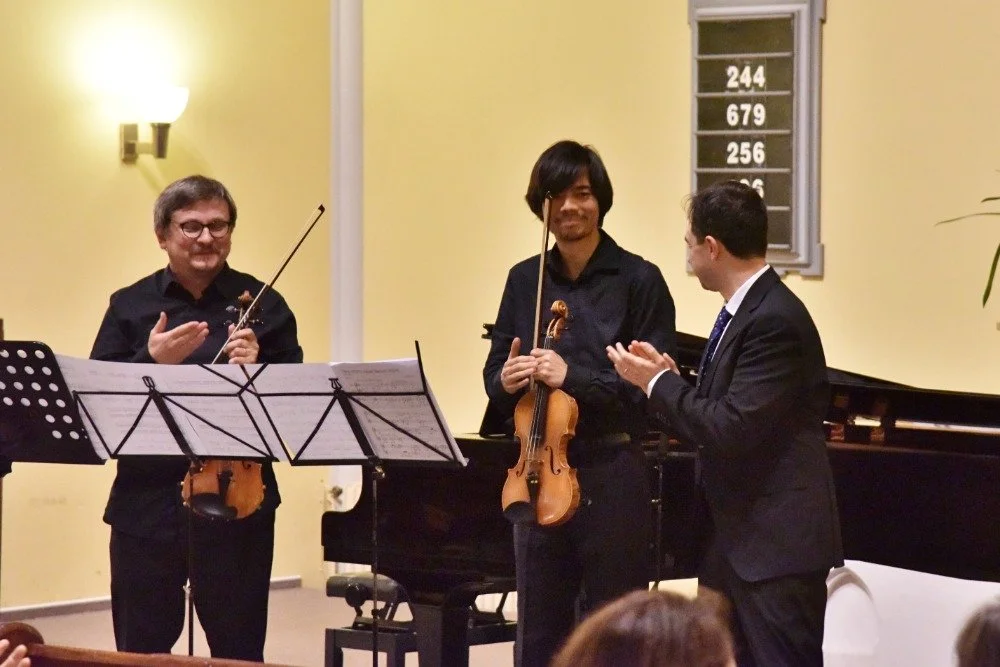
performed by David Danel and Roman Hradička, November 26, 2025, Korunní 60, Prague (CZ)
performed by David Danel and Roman Hradička, May 23, 2026, broadcast Czech Radio D-dur, Prague (CZ)Work description:
The introduction is based on the timbre of the notes, with the same note played on different strings. The two violins react to each other indirectly through echo and touch each other in a distant interplay. At first, the developing dialogue between the two voices is an inner dance, which gradually opens up and is expressed through increasingly lively movement. The dance is first light and agile, then energetic and wild. The scenes change, and the two voices are constantly looking for ways to express their shared movement. -
durata:
14 minutesperformances:
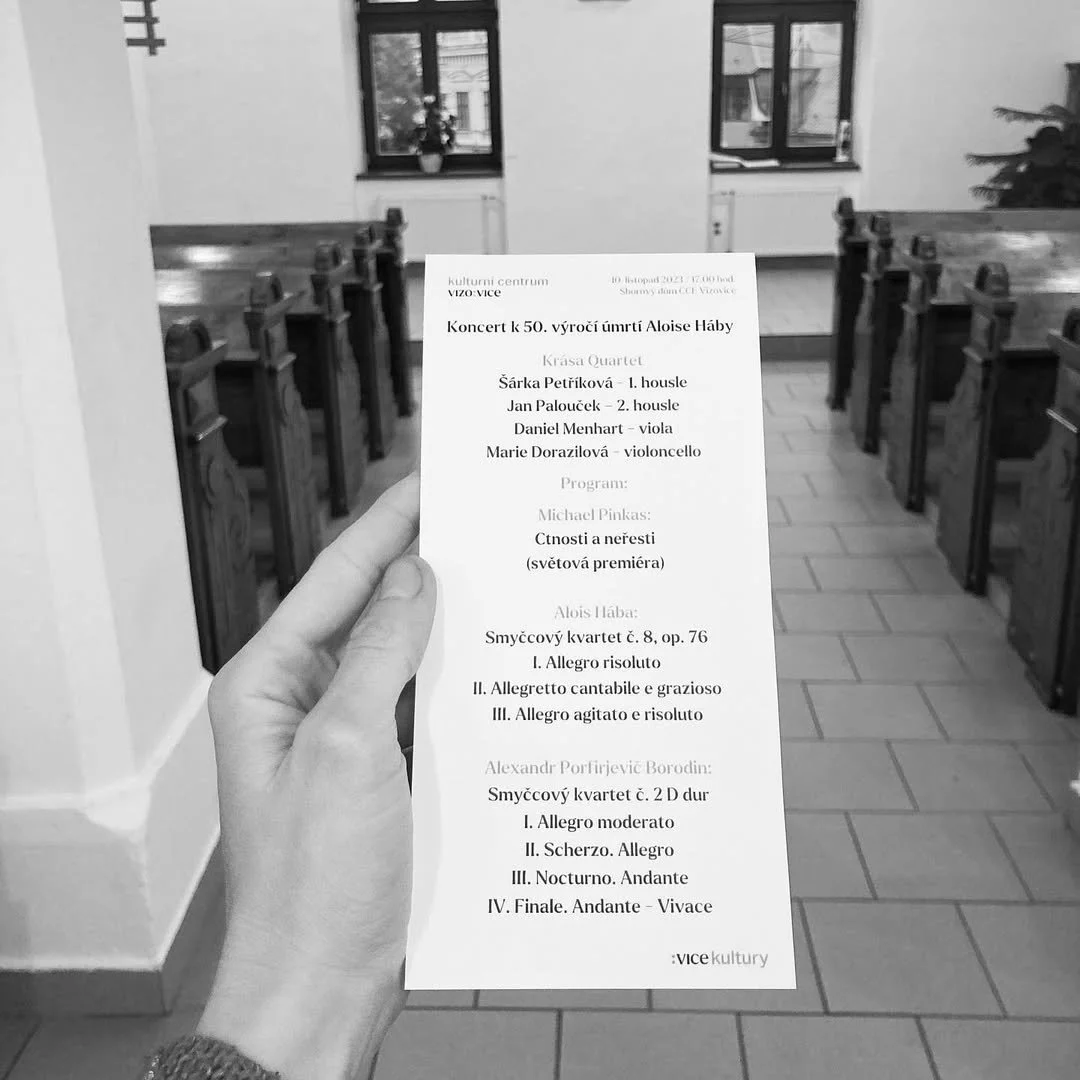
2023 Oct 10th, Vizovice (CZ), Sborový dům CČE, Konzert anlässlich des 50. Todestages von Alois Hába,
performed by Krása Quartet
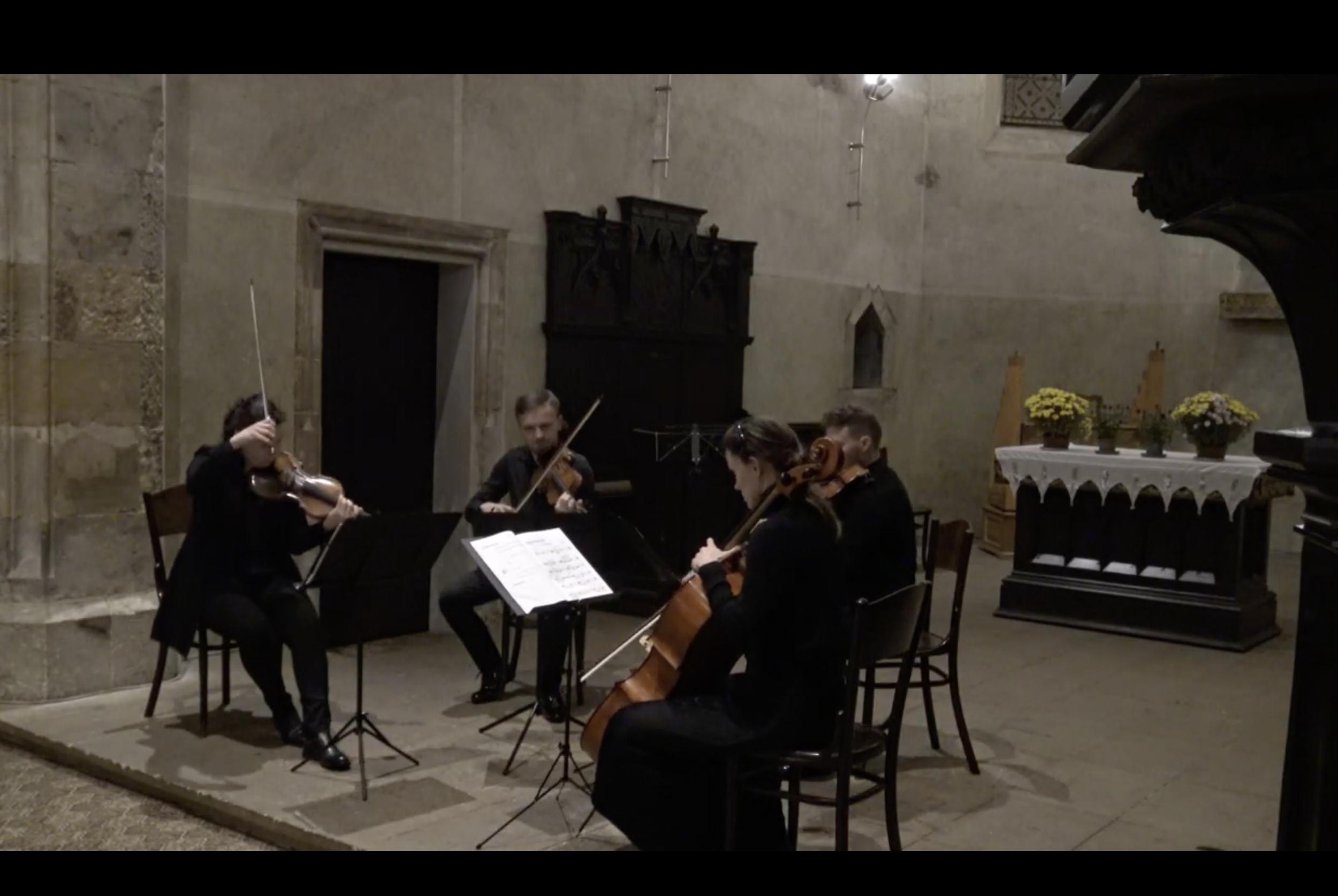
2023 Nov 14, Prague (CZ), Clemens Church, Days of Contemporary Music,
performed by Krása QuartetWork description:
Virtues and Vices for string quartet is a musical image of the Baroque complex of Kuks in Eastern Bohemia. The contrast between the Hospital of Death on the hill and the spa town of Life on the other side of the river, between darkness and light, night and the first ray of sun, vices and virtues, merges into one single moment – like the shadow and persona of one personality.
In the composition for string quartet, the sculptures of the Virtues and Vices – inspired by the allegorical sculpture cycle Virtues and Vices by Matthias Bernhard Braun in Kuks from around 1717 – are presented as short sound moments alternating with silence, in which the resonance continues to sound. Formally, the piece is a five-movement work with interludes, where the dialectical pairs of sound and silence create both an after-image of the previous movement and a pre-image of the next one. Through the gradual minimalist transformations of these moments, the piece searches for virtue as a balanced mean. -
performance:
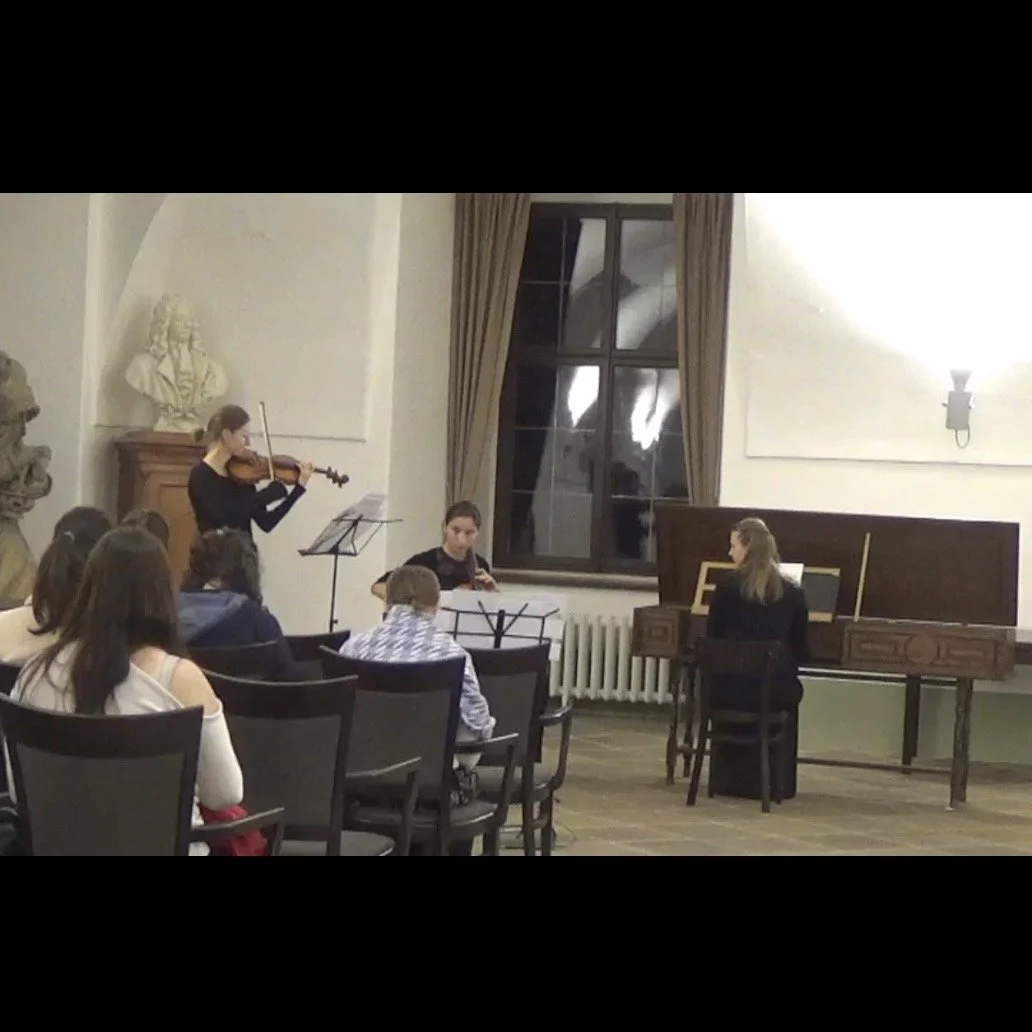
2023 October 23, Kuks (Czech Republic), concert as part of an elective course for students of Charles University, Hospital Kuks, Reflections for trio (violin, violoncello, harpsichord), performed by Iveta Horáčková, Alžběta Kupcová, and Karolína Moravcová. -
durata:
10 minutesperformances:
2016, April 5, Teplice (CZ), Teplice Conservatory,,
performed by the Ensemble of the Teplice Conservatory.
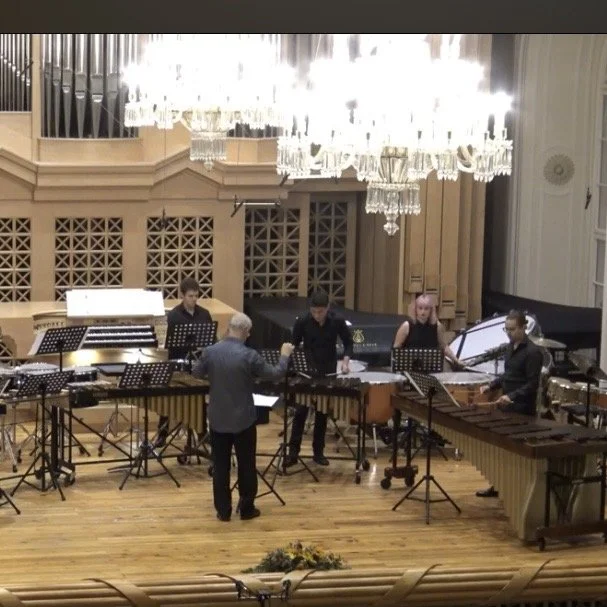
2022, October 14, Prague (CZ), Martinů Hall, Academy of Performing Arts in Prague, performed by the Percussion Quartet of the Academy of Performing Arts in Prague (New Version).Work description:
This cyclic composition for a quartet of percussionists is inspired by the Franus Cantional (Codex Franus) from 1505. Chorales were selected from this source that were sung during Advent before sunrise, the so-called Rorate chants: In hoc festo Domino, Rorate coeli, Unde gaudent angeli, and Ave hierarchia. Through the instrumental sound of marimba, xylophone, woodblock, timpani, snare drum, triangle, suspended cymbal, and tambourine, the morning chants are transformed into extended minimalist figures. -
-
durata:
9 minutesperformances:
2020 Nov 14th, Vienna (AT), KLAVIERgallerie, Creatives Zentrum Wien, performed by Magdalena Kołcz-Wrzesień
2021 Jan 26th, Vienna (AT), Festsaal, Seilerstätte, performed by Magdalena Kołcz-Wrzesień
2021 Apr 23rd, Prague (CZ), Kaiserstein Palace, performed by Ludmila Pavlová (revised version)
2021 Nov 11th, Prague (CZ), St. Kliment Church, performed by Ludmila Pavlová (revised version)Work description:
In Capriccio for solo violin, I was guided by a capricious freedom of formation and by the inspiration of Jacques Callot’s Les Caprices. As Charles Perrault wrote in 1700, Callot was able to suggest figures, actions, and character through only a limited number of lines within a small space. Similarly, I unfold Capriccio from a reduced number of musical gestures that run through the piece as contrasting activities. These gestures shape not only the musical character, but also the bodily movement of the performer: changes of bowing, articulation, pressure, and impulse become part of the solo piece, so that the music emerges as a play of gesture, motion, and character within a perceived musical space.Capriccio was commissioned by the violinist Magdalena Kołcz Wrzesień in 2020 and written in memory of the Polish composer Krzystof Penderecki (1933-2020). The premiere took place in autumn 2020 in Vienna. The composition was revised in spring 2021 and the revised version was performed by violinist Ludmila Pavlová as part of the Days of Contemporary Music festival in Prague.
-
performance:
2019 May 31, Vienna (Austria), Ateliertheater, Cadenza for solo viola, performed by Jacqueline Kopacinski. -
Performance:
2020, May 16, Vienna (AT), Echoraum, -
Durata:
3’17’’Performance:
2020, May 16, Vienna (AT), Echoraum,Work description:
This composition was written in response to the introduction of mandatory face masks in 2020. As masks were initially unavailable, many people began sewing them at home. The mechanical sound of the sewing machine [Nähmaschine] thus became one of the symbols of that time. -
performance:
2019 April 11, Teplice (CZ), Cultural House, Allegro giocoso for orchestra, performed by the North Czech Philharmonic, Petr Vronský (conductor).
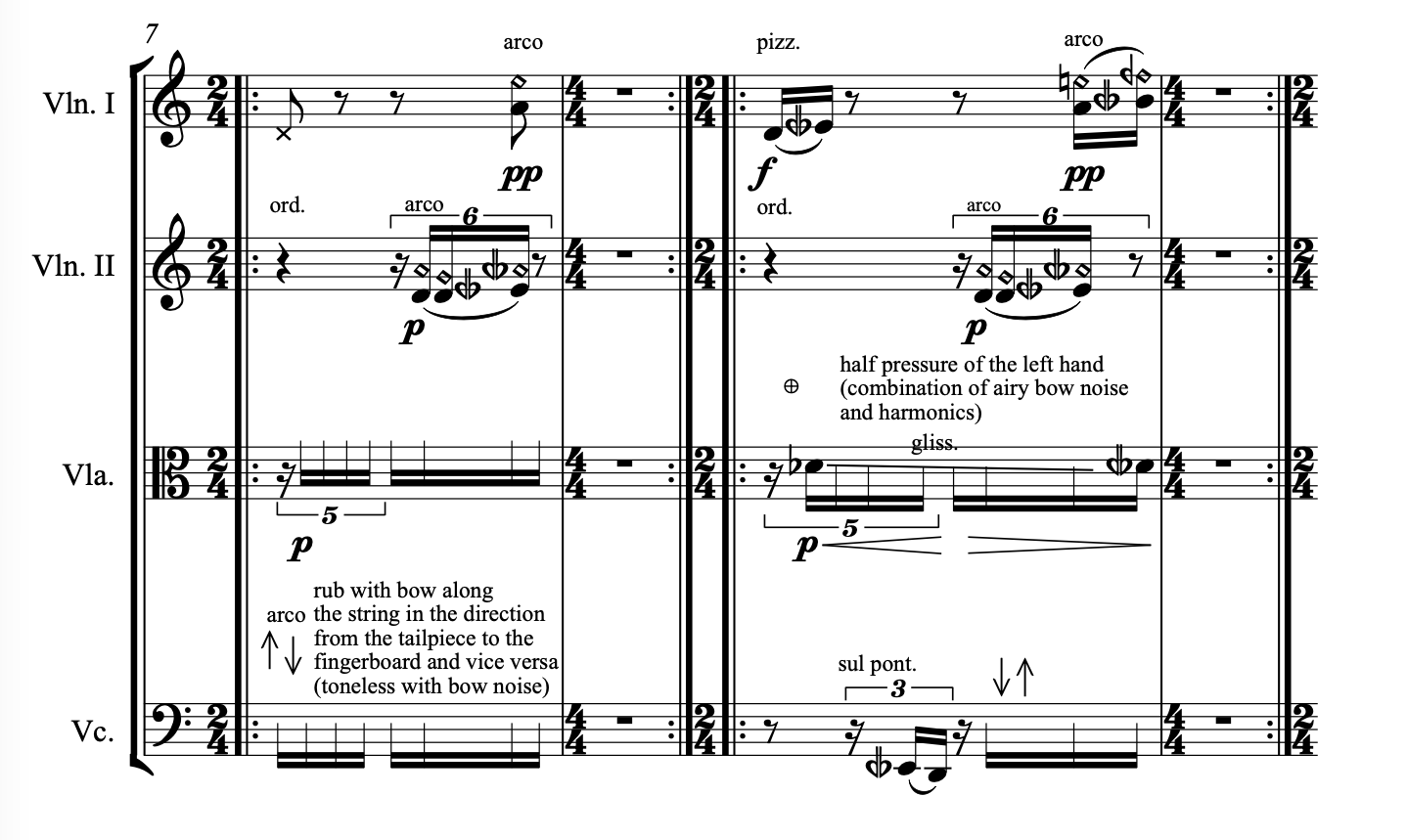
Virtues and Vices (2023), bars 7-8
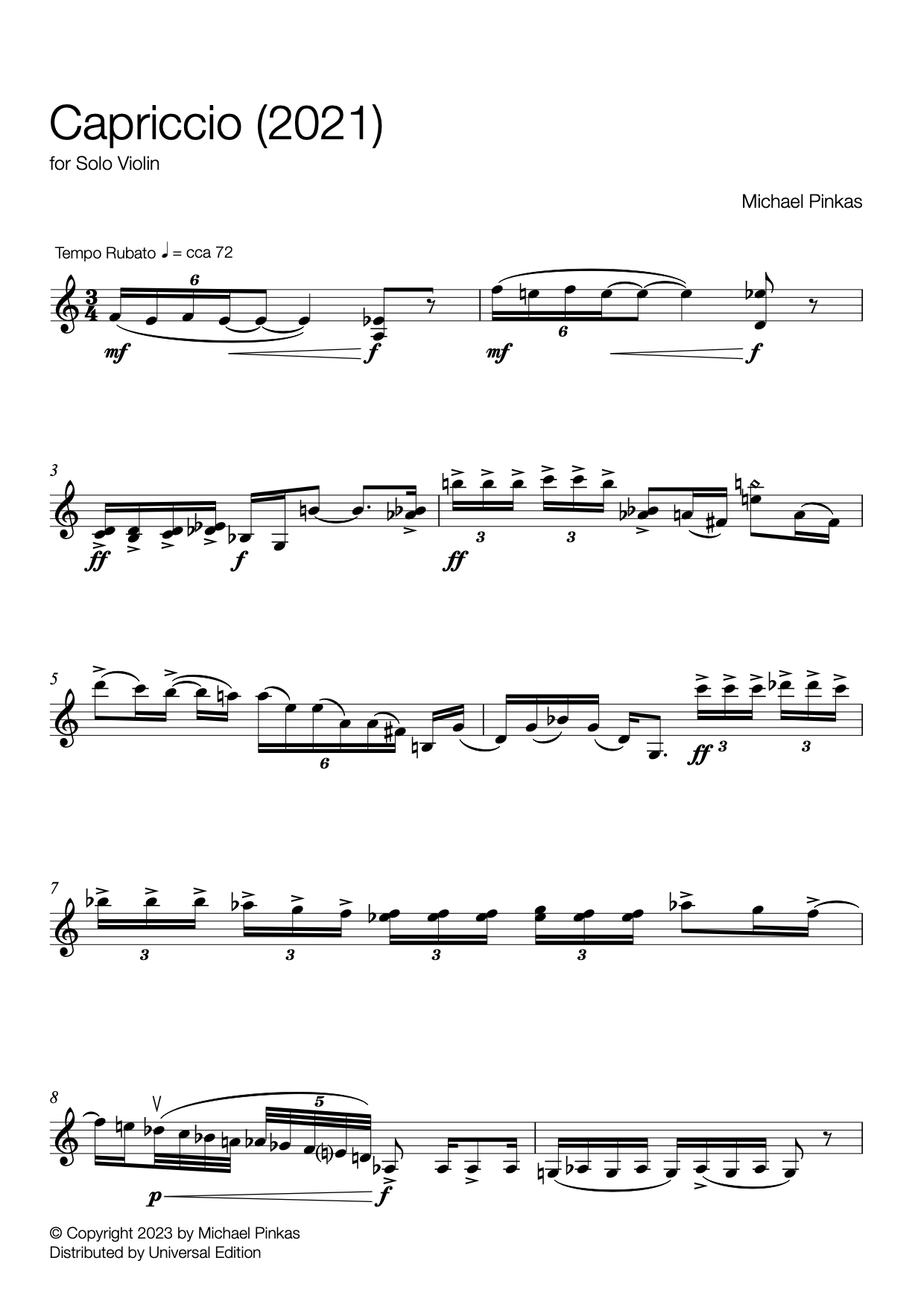
Capriccio (2021), bars 1-9
Concerts
-
![]()
1.8.2026, Vienna (AT), Klangtheater, Anton-von-Webern-Platz 1
____
Documents of Early Listening for percussion, piano, violoncello, electric guitar, performed by PHASE Ensemble -
![]()
30.11.2025, Prague (CZ), Čapek Hall, Anenská 5
____
Hochzeitsmesse [Svatební mše] for women’s choir and harmonium, performed by Bubureza Choir, conducted by Miloslava Vítková, Miroslav Navrátil (harmonium). -
![]()
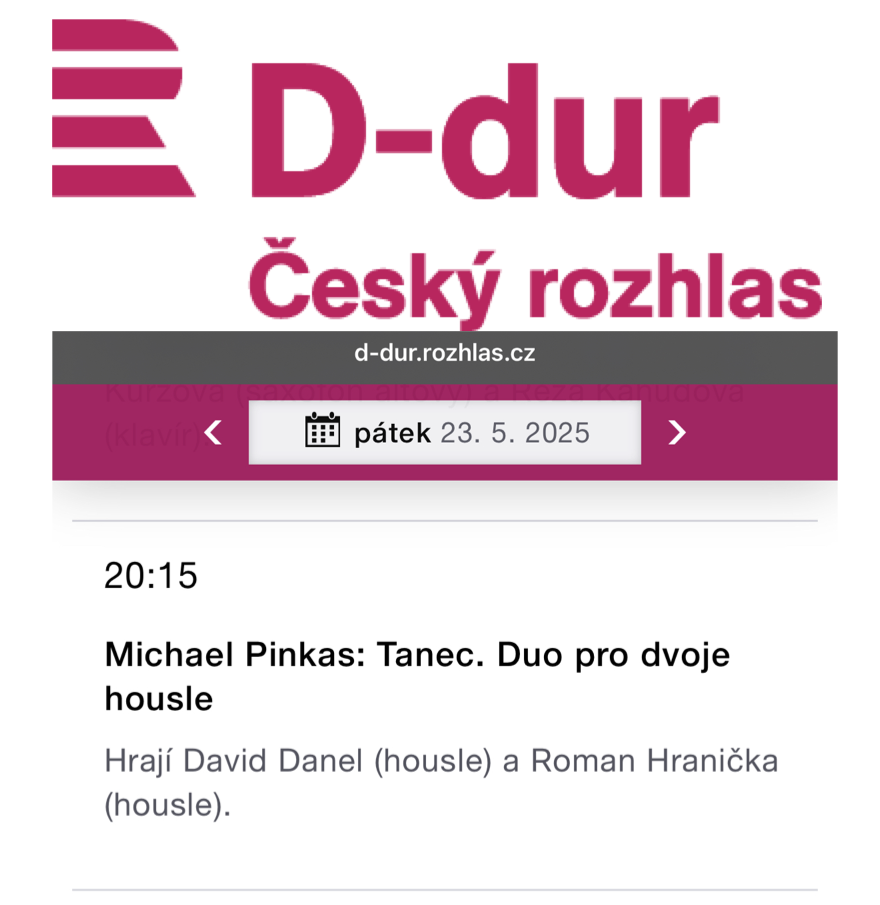
23.5.2025 Broadcast on Czech Radio D-dur [Český rozhlas D-dur]
____
Tanz (2021/2024) for two Violins [Tanec], performed by David Danel, Roman Hradička -
![]()
26.11.2024, Prague (CZ), Korunní 1440/60 –
____
Tanz [Tanec] (2021/2024) for two Violins, performed by David Danel, Roman Hradička -
![]()
14.11.2023, Prag (CZECHIA), St.-Klemens-Kirche
____
Virtues and Vices für Streichquartett, Aufführung: Krása Quartet -
![]()
23.10.2023, Kuks (CZECHIA), Hospitál Kuks
____
Reflections für Trio (Violine, Violoncello, Cembalo), Aufführung: Iveta Horáčková, Alžběta Kupcová, Karolína Moravcová -
![]()
10.10.2023, Vizovice (CZECHIA), Sborový dům CČE –
____
Virtues and Vices für Streichquartett, Aufführung: Krása Quartet -
![]()
14.10.2022, Prag (CZECHIA), Martinů-Saal, HAMU
____
Codex Franus, Aufführung: Schlagzeugquartett HAMU -
![]()
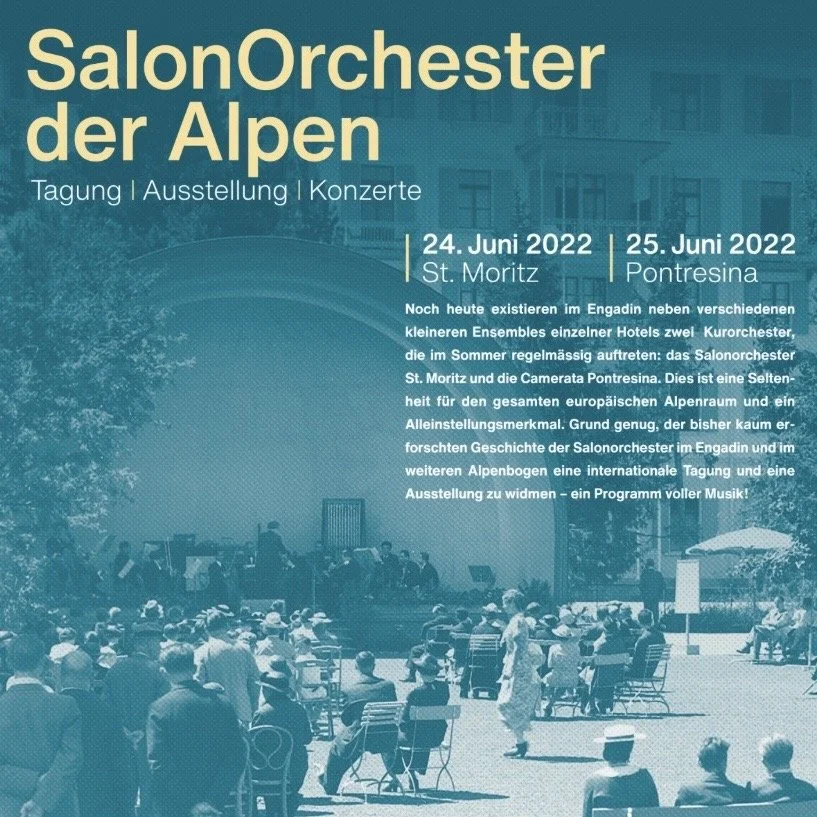
24.06.2022, St. Moritz (SWITZERLAND), Theatersaal
____
Fantasie über alte rätoromanische Tänze, performed by the Engadin Salon Orchestra, Marcin Danilewski
Publications
-
Link:
https://doi.org/10.82391/sustain.v1i2Abstract [DE]:
Der Beitrag untersucht, wie postdigitale Formen gemeinschaftlicher Wissenspraxis im Kontext von Komposition und Musiktheorie an europäischen Musikhochschulen institutionell verankert sind. Grundlage ist eine Analyse von Entwicklungsplänen 2020+ mit Fokus auf digitale Transformation, Entwicklung und Erschließung der Künste (EEK) sowie internationale Vernetzung. Ergänzend werden Lehrformate und Outreach-Strategien betrachtet. Anhand von Beispielen wie der Open Music Academy, MusCoDA, KoALa sowie Initiativen wie IN.TUNE oder dem Global Conservatoire wird gezeigt, wie sich digitale Angebote zu kooperativen Wissensräumen entwickeln, in denen Studierende als Mitgestaltende ästhetischer und analytischer Prozesse agieren. Ziel ist es, Perspektiven für die didaktische Förderung postdigitaler Wissenspraxis und ihren Transfer zwischen Hochschule, Forschung und Öffentlichkeit zu reflektieren.Abstract [EN]:
This article examines how post-digital forms of collaborative knowledge practice are embedded in the context of composition and music theory at European music universities. It is based on an analysis of development plans 2020+, focusing on digi tal transformation, the development and exploration of the arts, and international networking. In addition, teaching formats and outreach strategies are considered. Drawing on examples like the Open Music Academy, MusCoDA, KoALa, and initiatives including IN.TUNE and the Global Conservatoire, the article shows how digital offerings are evolving into cooperative knowledge spaces in which students act as active contributors to aesthetic and analytical processes. The aim is to outline perspectives for the didactic support of post-digital knowledge practices and to reflect on their transfer between higher education, artistic research, and public. -
Link:
https://www.die-tonkunst.de/index.php?cID=1106Excerpt:
Der im Jahr 2025 von Kathrin Kirsch und Joe Reinke herausgegebene Band Sinne | Sinn 01 ist aus einer Konferenz hervorgegangen, die vom 21. bis zum 23. Oktober 2022 in erstmaliger Zusammenarbeit des Forums für zeitgenössische Musik e. V., des Musikwissenschaftlichen Instituts der CAU Kiel, der Musikhochschule Lübeck und der Muthesius Kunsthochschule Kiel veranstaltet wurde. Dass sich das künstlerisch-wissenschaftlich interdisziplinäre Projekt inzwischen bereits in der fünften angekündigten Runde befindet (Sinne | Sinn 05 im November 2026), verweist auf eine gelungene Fortsetzung dieses vielversprechenden Formats, das nicht zufällig als »Konzert-reihe & Symposium« bezeichnet wird. Schon in dieser Doppelbezeichnung erscheint es weniger als rein wissenschaftliche Tagung denn als Verbindung praktisch erfahrener Kunst mit thematisch zusammenhängenden Vorträgen. Der Band selbst lässt sich sehr lohnend als reflexive Erweiterung der Tagung lesen. Er versammelt Texte der Vortragenden, die folgendermaßen gegliedert sind: 1. Als »Exposé der grundlegenden Figur und ihrer Reflexion«, 2. Als »methodisch ausgerichtete Fragestellung nach konkreten Konsequenzen für die musikologische Arbeitsweise«, 3. Als »schlaglichtartige Betrachtungen zu Werken, die im Zusammenhang mit der Tagung zur Aufführung kamen« (S. 12), sowie eine redigierte Fassung der Abschlussdiskussion. […] -
Link:
https://doi.org/10.31751/p.347Abstract [DE]:
Riemanns Funktionstheorie stieß bei tschechischen Musiktheoretikern bereits sehr früh auf Interesse. Dies zeigte sich in überwiegend kritischen Beiträgen zur dualistischen Theorie oder solchen, in denen die Funktionstheorie explizit abgelehnt wurde; sie stammten u. a. von František Z. Skuherský (1885), Otakar Hostinský (1887), Karel Stecker (1889) und Leoš Janáček (1912). Nach seinem Eintritt in das Prager Konservatorium veröffentlichte Otakar Šín (1881–1943), der ein Schüler Steckers (und gleichzeitig ein Kritiker von dessen Pädagogik) war, seine Nauka o harmonii na základě melodie a rytmu [Harmonielehre auf Grund der Melodie und des Rhythmus] (1922), die als erste tschechische Harmonielehre funktionstheoretisch konzipiert war und die auf Generalbass basierte Nauka o harmonii [Harmonielehre] (1887) seines Vorgängers Josef Foerster ersetzen sollte. Obwohl Šíns Lehrbuch für die praktische pädagogische Arbeit gedacht ist und damit eine Behandlung grundlegender Gegenstände im Zentrum steht, enthält es zusätzlich neuartige Ideen, mit denen ihr Verfasser Riemanns Funktionstheorie auf zeitgenössische Musik anzuwenden versucht. In der stark überarbeiteten zweiten Ausgabe seines Lehrbuchs Úplná harmonie na základě melodie a rytmu [Harmonielehre auf Grund der Melodie und des Rhythmus] aus dem Jahr 1933 ersetzt Šín die Riemannschen Zeichen für Nebendreiklänge durch Kombinationen von Zeichen für Hauptfunktionen, gefolgt von Zeichen für Akkordkombinationen, mit denen die Musik seiner Gegenwart erklärt werden sollte. Bis heute fehlt eine Betrachtung von Šíns Lehrbuch im Kontext der europäischen Theorie-Landschaft. Im deutschsprachigen Raum ist das Lehrbuch von Šín kaum bekannt. Es stellt indes ein wichtiges Zeugnis der Verbindung zwischen neuerer deutschsprachiger und tschechischer Musiktheorie dar und kann auf die Harmonielehren von Hugo Riemann (1887), Rudolf Louis/Ludwig Thuille (1907), Ernst Kurth (1920) oder des Riemann-Schülers Hermann Erpf (1927) bezogen werden.Abstract [EN]:
Riemann's function theory aroused the interest of Czech music theorists very soon after his first publications on that subject. This was reflected in mainly critical contributions to the dualistic theory or those in which the functional theory was explicitly rejected; they came from by František Z. Skuherský (1885), Otakar Hostinský (1887), Karel Stecker (1889), and Leoš Janáček (1912). After entering the Prague Conservatory, Otakar Šín (1881–1943), who was a student of Stecker (and at the same time a critic of his pedagogy), published Nauka o harmonii na základě melodie a rytmu [Harmony Based on Melody and Rhythm] (1922), which was conceived as the first Czech harmony book based on functional theory and which was intended to replace the all too schematic Nauka o harmonii [Theory of Harmony] (1887) based on figured bass by his predecessor Josef Foerster. Although Šín's textbook is intended for practical pedagogical work and thus focuses on the standard curriculum, it also contains novel ideas with which its author attempts to apply Riemann's functional theory to contemporary music. In the second edition of his Úplná harmonie na základě melodie a rytmu [Complete harmony based on melody and rhythm] (1933), Šín replaces the Riemannian symbols for secondary triads with combinations of symbols for major functions, extended further by symbols for chord combinations, which were intended to explain the modern music of his time. However, to this day, Šín's textbook has not been included in the European theoretical landscape. Šín's textbook is hardly known in the German-speaking area, although it is an important testimony to the connection between modern German-language and Czech music theory. This connection can be traced in the harmony textbooks by Hugo Riemann (1887), Rudolf Louis/Ludwig Thuille (1907), Ernst Kurth (1920) or by the Riemann's Student Hermann Erpf (1927).SCHLAGWORTE/KEYWORDS:
Ernst Kurth; Funktionstheorie; Hermann Erpf; Hugo Riemann; Music Theory of the 1920s and 1930s; Musiktheorie der 1920er und 1930er Jahre; Otakar Šín; Theory of Functions -
https://www.die-tonkunst.de/index.php?cID=739
Das vorliegende Buch knüpft an Vorträge der Online-Tagung Aspekte softwaregestützter Interpretationsforschung im April 2021 sowie an einen im November 2021 stattgefundenen Workshop an. Es enthält überarbeitete, miteinander verlinkte Beiträge, überdies ein frei zugängliches Online-Repositorium der Materialien und Datensätze sowie Video-Tutorials auf YouTube. Der Sammelband zeigt, dass es in der heutigen Interpretationsforschung nicht nur notwendig ist, neue Erkenntnisse zur Aktualisierung des Wissens zu gewinnen, sondern auch vorwiegend gemeinschaftlich in einer wissenschaftlichen Fachcommunity Problemstellungen als multiperspektivisches Bild zu erforschen. Die hohe Komplexität der insgesamt zwei Keynotes und 18 weiteren Beiträge wird auch dadurch erreicht, dass sie gleichzeitig sowohl aktualisierte praktische und pragmatische, grundsätzliche Schritt-für-Schritt-Anweisungen zur computergestützten Analyse als auch übergreifende Methodendiskussionen zu Sinn und Zweck der gemessenen Daten bietet. […] -
Link:
https://zenodo.org/records/7432133Abstract:
The article deals with the temptation of speech in the teaching of music, as highlighted in Thomas Mann’s Doktor Faustus. Within the framework of the teacher-pupil, pupil-narrator and narrator-reader dialogue in Thomas Mann’s Doktor Faustus, a new perspective on the perception of music is formed without a single note being played. Words are meant to take us to imagery. Correspondingly, is it possible to talk about the music that exists, to construct ideas logically, but to be distant from the identity of what is heard? Such questions are the basis of the hermeneutic spiral of analysis-interpretation and the subject of teacher-pupil dialogue, where true insight can be born. -
-
-
Conferences

2026, Belgrade (SERBIA), »Translating Invisible Textbooks: Towards Terminological Polyphonies between German-Speaking and Czech Music Theory after 1918«, 16th International Conference on Music Theory and Analysis, Polyphony of Music Theory: Methodological Pluralism in Scholarship, University of Arts in Belgrade.
2026, Barcelona (SPAIN), »Performative Perception of Form in an Imaginary Choreography: Motions // Der doppelte Blick by Isabel Mundry«, 11th European Music Analysis Conference, Escola Superior de Música de Catalunya (ESMUC).
2026, Dublin (IRELAND), »Birds as latent microphones: Corporeality and Acoustic Territories in Isabel Mundry’s Vogelperspektiven«, Dublin Music Analysis Conference of the Society for Music Analysis, Trinity College Dublin & the Royal Irish Academy of Music.
2026, Vienna (AUSTRIA), IN.TUNE Summit, pilot project: »Hidden Harmonies, Meaning, and Power in Women Composers’ Works«, mdw - University of Music and Performing Arts Vienna.
2026, The Hague (THE NETHERLANDS), »Re-reading de la Motte’s Harmonielehre through 19th-Century Women Composers as an Educational Experiment«, Dutch-Flemish Society for Music Theory Conference »Music Theory and Education Through the Ages«, Royal Conservatoire The Hague.
2023, Freiburg (SWITZERLAND), »Der Schaffensprozess des musikalischen Analysierens und Komponierens anhand hörbiographischer und autoethnographischer Methoden – dargestellt am Beispiel Isabel Mundrys Noli me tangere«, 23th Congress of the Gesellschaft für Musiktheorie, The Freiburg Music University.
2022, Salzburg (AUSTRIA), »Ein Gegenmodell zu Schönbergs Konzept der entwickelnden Variation: Implikationen der Aufführungsgeschichte von Johannes Brahms‘ Streichquartetten op. 51«, 22th Congress of the Gesellschaft für Musiktheorie, Mozarteum University Salzburg.
2022, St. Moritz (SWITZERLAND), Salonorchester der Alpen, »Traditionsreiche Engadiner Musikquellen neu arrangiert: Fantasie über alte rätoromanische Tänze und Prager Straßenmusik«, The University of Basel.
2022, Leipzig (GERMANY), »Jahren in Algerien: Suche des Fremden bei Émile Jaques-Dalcroze und Béla Bartók«, Weimarer Tagung, The University of Music and Theatre "Felix Mendelssohn Bartholdy" Leipzig.
2021, Basel (SWITZERLAND), »Riemann-Rezeption in Tschechien: Zu Otakar Šíns Harmonielehre«, 21th Congress of the Gesellschaft für Musiktheorie »Tonsysteme und Stimmungen«, Musik-Akademie Basel/Hochschule für Musik (FHNW).
Recordings & Videos
NOVEMBER 2020
I am pleased to announce the premiere performance of my piece Capriccio (2020), performed by the violinist Magdalena Kołcz-Wrzesień. The premiere took place on November 14, 2020, at the KLAVIERgallerie in Vienna, Austria.
Capriccio is an imaginative, free and lively solo piece with two themes that arbitrarily seek their validity. The first theme is rooted in an energetic gesture, the second theme is lyrical with large intervallic leaps. When the solitary gesture finds a way into continuous movement and the lyrical theme is transferred into irregular dance, both thoughts are unpredictably abandoned to open a long coda that attempts to mimic a process of previous development without precise application or suggestion of the main themes.
Cadenza (2019)
performed by Jaqueline Kopacinski (viola)
Premiere: May 31, 2019, Atelier Theater, Wien, AT
Dance (2019)
performed by Aleksandra Juszczak, Magdalena Kołcz-Wrzesien (violin)
Premiere: May 27, 2019, Joseph Haydn-Saal, Wien, AT
The introduction is based on the timbre of the notes, with the same note played on different strings. The two violins react to each other indirectly through the echo and touch each other from a distance in a heartfelt interplay. At first, the developing dialogue of two voices is an inner dance that gradually opens up and is expressed through increasingly lively movement. The dance is first light and agile, then energetic and wild. The scenes are changing, and two voices are constantly looking for ways to express their common movement.
Allegro giocoso
for orchestra (2018)
peformed by North Czech Philharmonic, Petr Vronský (conductor)
Premiere: May 25, 2018, Teplice, CZ
This work is based on the rhythmic reflections of the various instrumental groups, which playfully vary. In terms of style, the Sinfonietta takes its cue from the work of the Czech composer Bohuslav Martinů, especially his balancing of the fantastic, even surrealistic, while at the same time maintaining the rationality of the form.
The Wedding Mass (2017)
The Wedding Mass for women's choir and string quartet was written for the occasion of a wedding and premiered in the Piarist Church in Litomyšl. The mass consists of three parts: "Kyrie", "Sanctus" and "Agnus Dei". The guidance of the melody is influenced by Gregorian chant. The final cadenzas always culminate in a triad g-b-c, which is meant to be united with the tuning of the church bells. The last part, "Agnus Dei", was influenced by the early Renaissance setting technique of the Canon of Proportion.
Codex Franus (2016)
This piece is inspired by the old chorales from the Codex Franus of 1505. The chorales chosen were those sung before sunrise during Advent, the so-called rorats: "In hoc festo Domino", "Rorate coeli", "Unde gaudent angeli" and "Ave hierarchia". The instrumental sound is a mixture of marimba, xylophone, and wood block so that the morning songs can be presented as extended minimalist figures.
Contact
michaelpinkas@gmail.com
(00420) 608 159 480