❋
INVISIBLE TEXTBOOKS
Project Concept
INVISIBLE TEXTBOOKS
Ways of Speaking about Music Across Languages and Borders in Central and Southeastern Europe since 1918
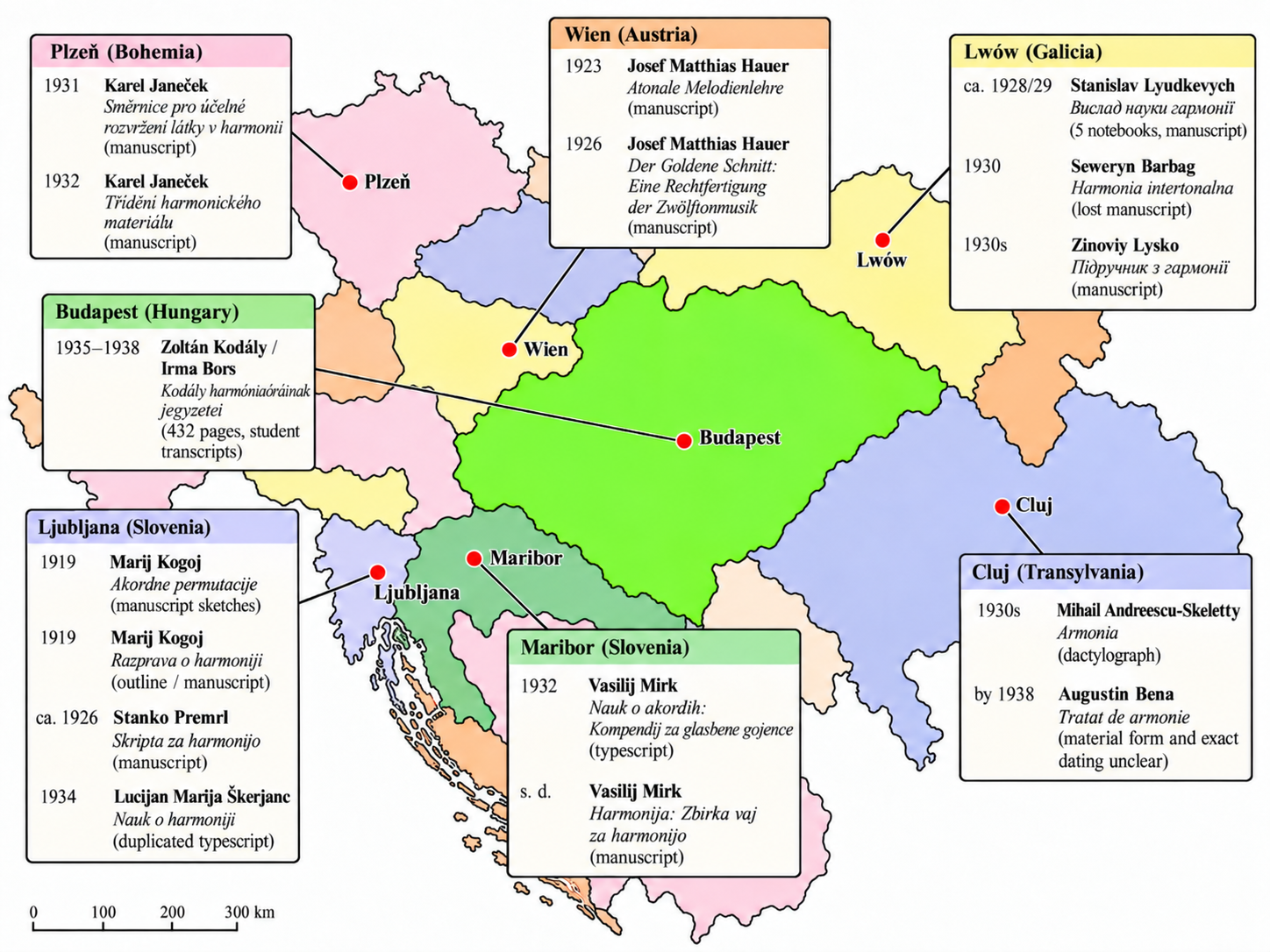
The music-theoretical project Invisible Textbooks combines an open-access online database of little-known pedagogical sources with public forums in Vienna, Belgrade, and Prague. Both address the question: How have ways of speaking about music developed in Central and Southeastern Europe since 1918? Music-theoretical sources from the post-Habsburg space reflect different analytical traditions, yet many have never been translated into English or German. The database will make these sources visible, while the forums will connect teachers, students, researchers, and the wider public across languages and borders.
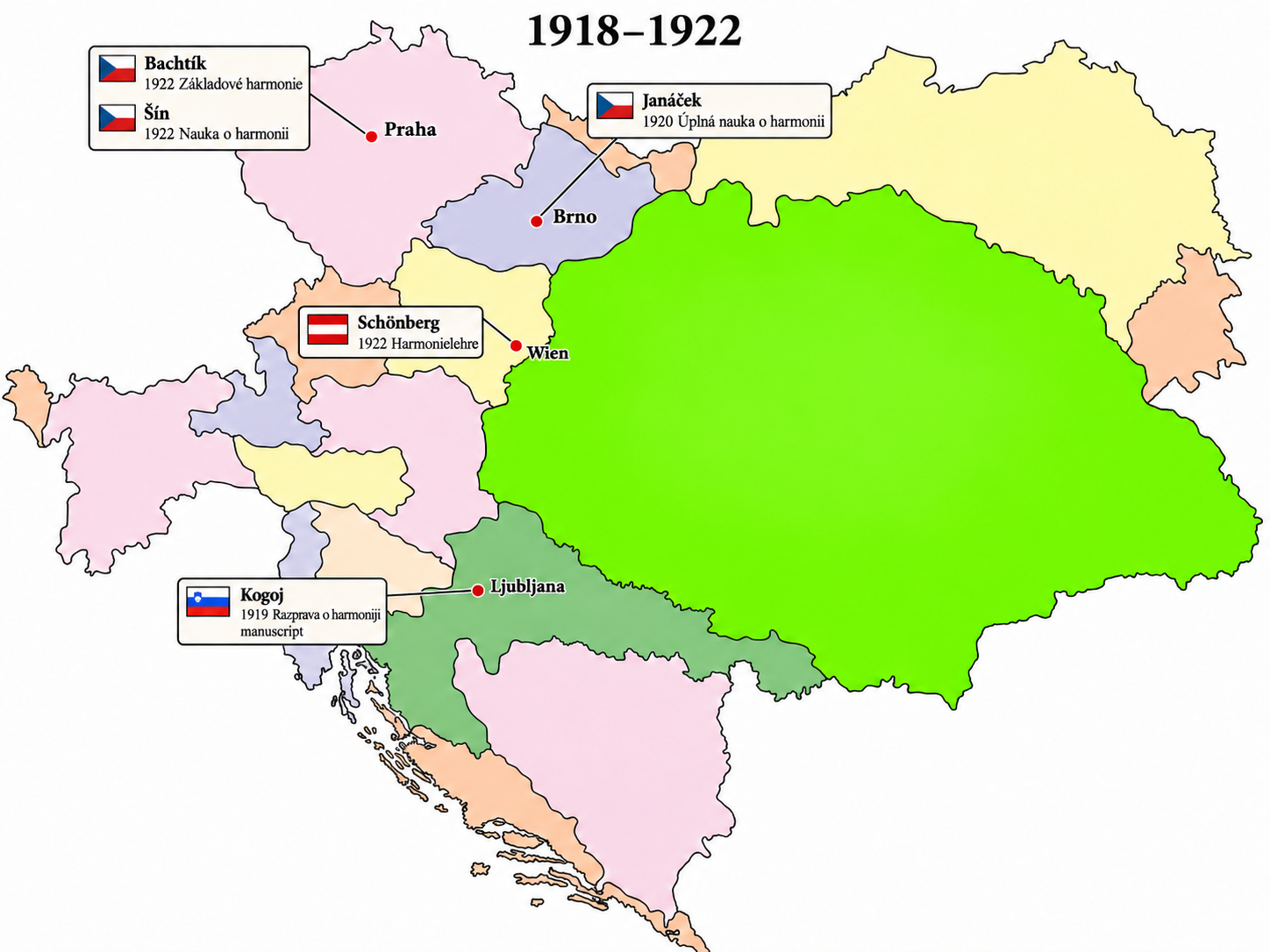
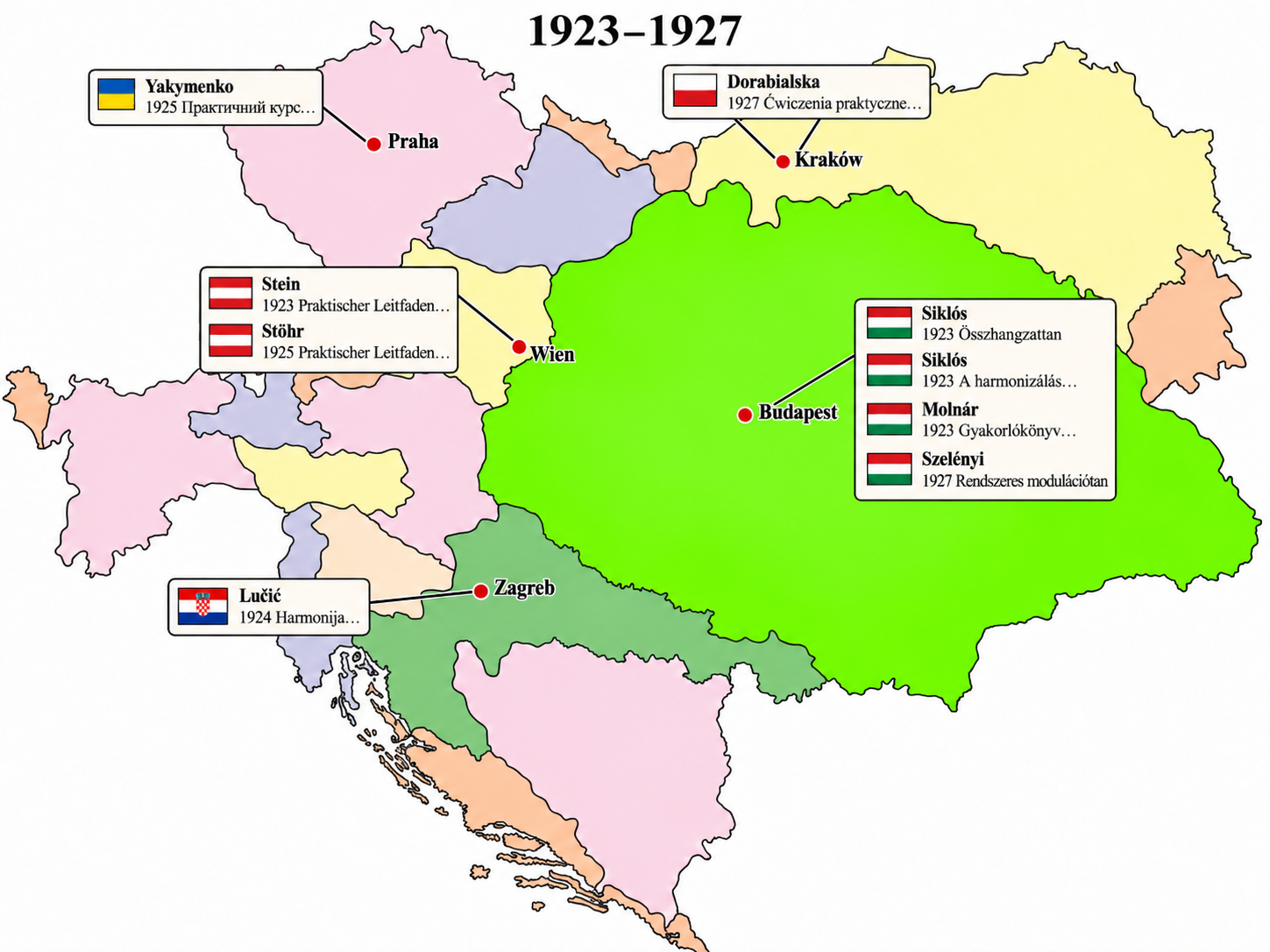
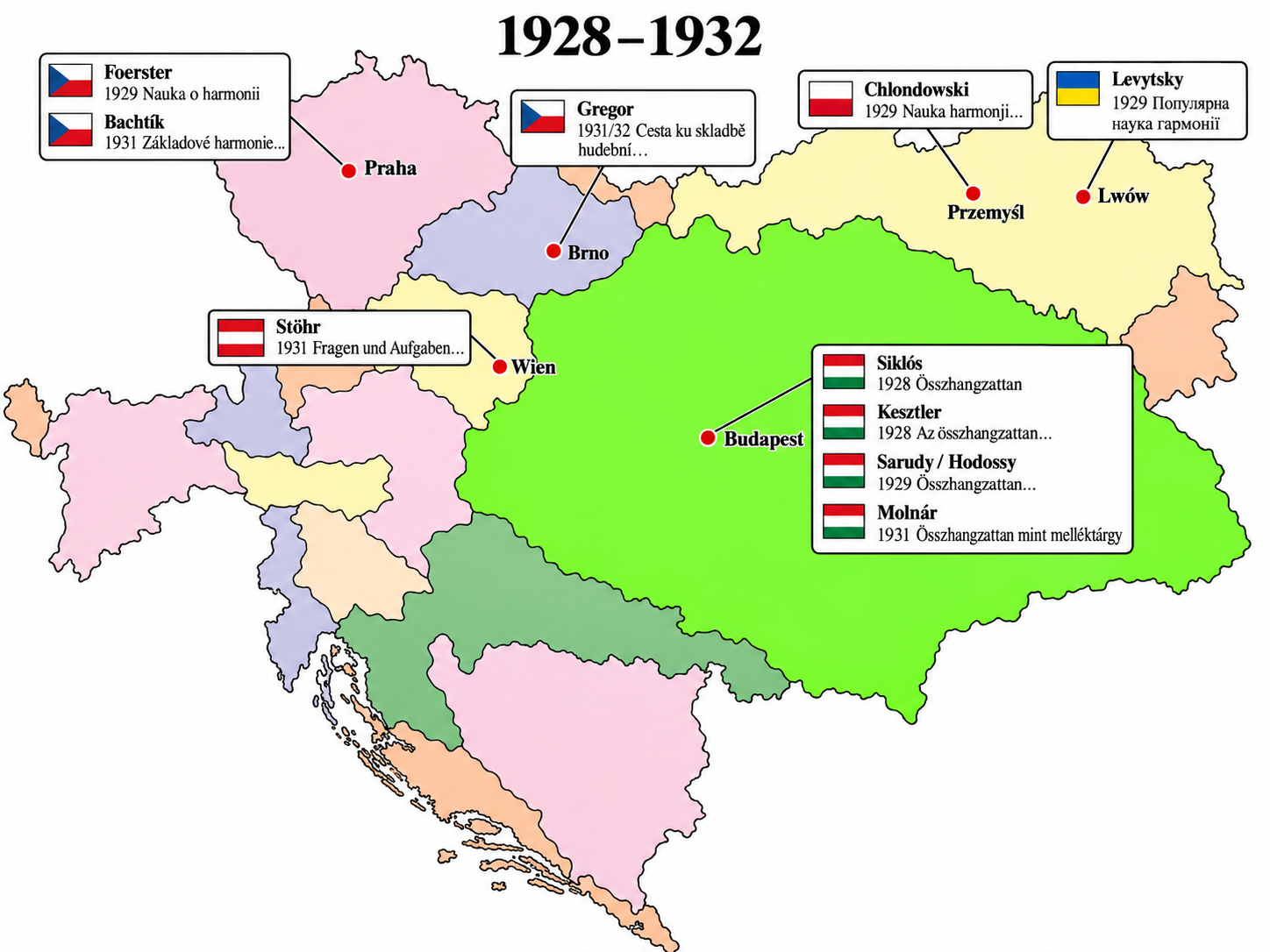
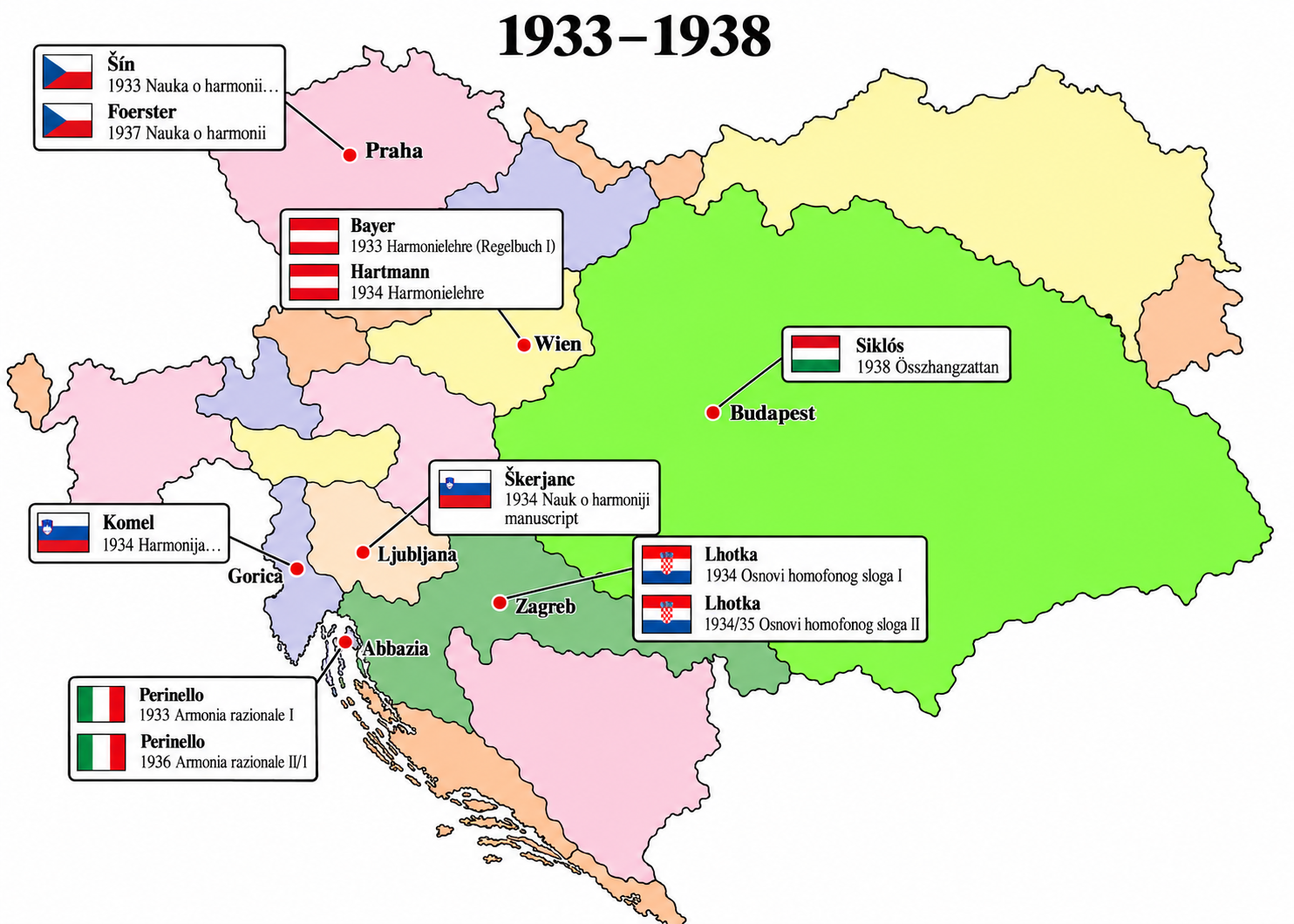
Central Europe can be understood as a cultural space shaped by translocal and transnational exchange (cf. Csáky 2011, „Zentraleuropa – Kultur – Musik“). After the dissolution of Austria-Hungary in 1918, music education in this historically connected region developed within new or reorganised institutions. In the following years, new conservatoires were established in Brno, Ljubljana, Cluj, Bratislava, Maribor, and Sarajevo, and others soon followed. The development of these institutions created a need for teaching materials, some of which remained unpublished. Some drew on German-speaking authors or developed their own vocabulary for analysis, contributing to a still relatively little-studied terminological polyphony in music theory in Central and Southeastern Europe (cf. Pinkas 2025, „Riemann-Rezeption in Tschechien“). Student mobility continued across the new borders: Slavko Osterc, for example, studied in Prague and later wrote a harmony manuscript in Ljubljana. These connections suggest that local music-theoretical traditions should not be studied in isolation. The limited international reception of these pedagogical sources, and thus their relative invisibility, can be understood in relation to Blaž Zabel’s notion of „(semi)peripheral scholarship“ (2025) and to the „deficits and asymmetries in the exchange of ideas and the reception of scholarly literature that result from the division of Europe in the 20th century“ (Paul Celan Fellowship Statement).